Is a retreat just another type of holiday?
Beautiful destinations. Incredible accommodation. Delicious food. New experiences and wonderful people.
On the surface, retreats and tours can look remarkably similar.
Both can take you somewhere you’ve never been, introduce you to new cultures and create memories that last a lifetime.
But there’s an important difference.
A tour is primarily about exploring a destination.
A retreat is about creating an experience with intention.
At Retreat Me Happy, we believe both have their place. There’s nothing quite like discovering somewhere new, whether you’re exploring the streets of India, relaxing on a beach in Bali or trekking through the mountains of Peru.
But when you’re choosing a retreat, you’re signing up for something beyond the destination itself.
You’re giving yourself the opportunity to step away from everyday life, connect with others, learn something new and potentially experience a meaningful shift.
So what really separates a retreat from a tour?
What is a retreat?
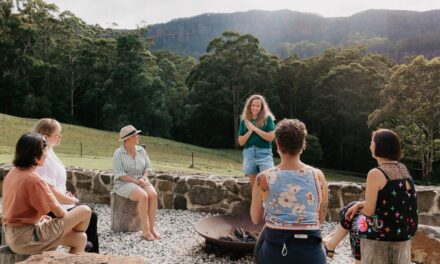
A retreat is an intentionally designed experience that gives participants time and space to focus on a particular purpose.
That purpose might be rest, relaxation, wellness, creativity, personal growth, professional development, adventure or connection.
Retreats can take many forms, including yoga retreats, writing retreats, business retreats, women’s retreats, creative retreats and adventure retreats.
What they share is a focus on the experience of the participant, rather than simply the places they visit.
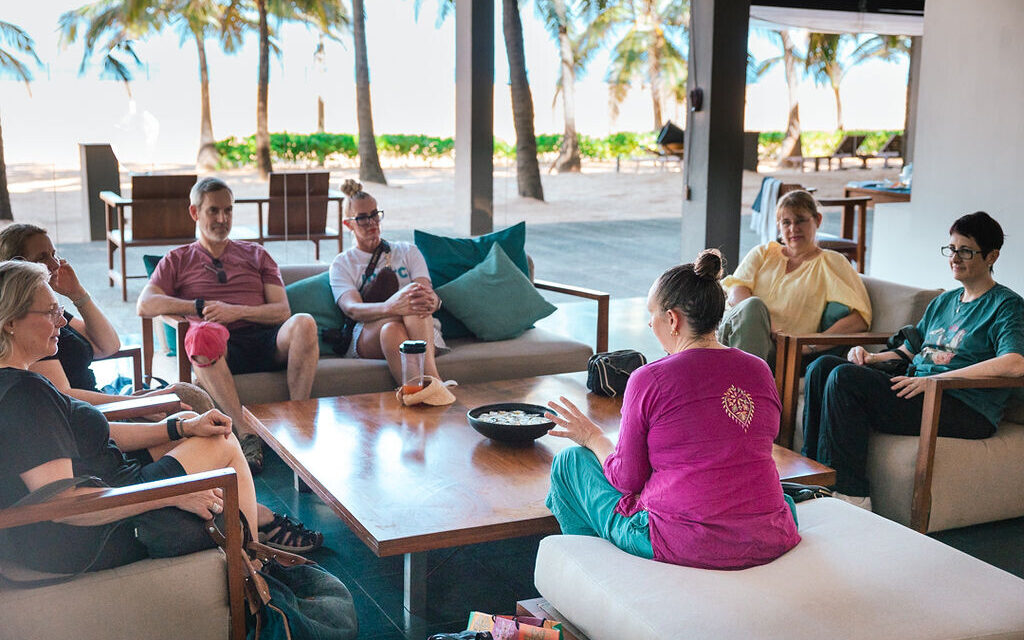
A great retreat brings together a carefully considered environment, activities, facilitation and opportunities for connection.
And importantly, it allows space for participants to experience the retreat in their own way.
What is a tour?
A tour is generally designed around exploring a destination.
It might involve sightseeing, cultural experiences, guided activities, adventure or visiting several locations as part of an organised itinerary.
Tours can be incredibly rewarding. They offer convenience, local knowledge and opportunities to discover places you might not otherwise visit.
They can also be transformative.
Travel has a wonderful ability to change our perspectives, introduce us to different ways of living and challenge what we thought we knew.
The distinction isn’t that tours can’t change your life.
It’s that personal transformation isn’t necessarily the central intention of a tour, whereas a retreat is designed to create the conditions for reflection, growth or renewal.
Retreat vs tour: The key differences
| Retreat | Tour | |
| Primary purpose | Rest, growth, learning or connection | Exploring and experiencing a destination |
| Focus | The internal experience as well as the surroundings | External exploration and discovery |
| Pace | Often slower, with time for reflection | Usually guided by an itinerary |
| Leadership | Retreat host, facilitator, coach or specialist | Tour guide or tour leader |
| Activities | Purposeful experiences, workshops and shared activities | Sightseeing, excursions and cultural experiences |
| Group connection | Often intentionally facilitated | Often develops naturally through shared travel |
| Takeaway | Insights, relationships, skills or personal renewal | Memories, knowledge and travel experiences |
Of course, these aren’t rigid categories. Some tours are wonderfully slow and immersive, while some retreats include plenty of adventure and exploration.
It’s the overall intention that makes the difference.
1. A retreat starts with intention
One of the biggest differences between a retreat and a tour is why people are attending.
Someone booking a tour of India might want to visit the Taj Mahal, explore Rajasthan, experience local food and discover the country’s history.
Someone booking a retreat in India might enjoy all those things too, but they’re also seeking something else.
Perhaps they want to reconnect with themselves, explore a new direction in life, build confidence or simply take time away from their usual responsibilities.
The destination becomes part of the experience rather than the entire purpose.
For retreat hosts, this distinction is especially important.
Before planning activities or choosing accommodation, a host should be clear about the intention behind the retreat and who it’s designed for.
That clarity helps attract the right participants and creates a more meaningful experience for everyone.
2. Retreats create space to slow down
When you’re travelling somewhere exciting, it’s tempting to fill every available moment.
Another excursion. Another landmark. Another restaurant. Another experience.
And while that’s wonderful on a holiday or tour, it can work against the purpose of a retreat.
Retreats need breathing room.
Time to rest. Time to reflect. Time to connect with other people. Time to process what you’re learning or experiencing.
That doesn’t mean sitting around doing nothing all day.
It means recognising that the space between activities can be just as valuable as the activities themselves.
A well-designed retreat offers a balance between structured experiences and the freedom to simply be.
Sometimes, the most meaningful conversations happen over a cup of tea, during a quiet walk or while sitting together after a workshop.
Those moments can’t always be scheduled.
3. Connection is part of the experience
One of the most valuable aspects of attending a retreat is the opportunity to connect with people who share similar interests, intentions or experiences.
You might arrive knowing nobody.
But through shared activities, conversations and time together, relationships can develop in ways that feel different from everyday social interactions.
A retreat host plays an important role in creating opportunities for those connections.
This might involve group discussions, communal meals, workshops or simply choosing a venue with welcoming shared spaces.
It’s not about forcing friendships.
It’s about creating an environment where people feel comfortable connecting with themselves and others.
And sometimes, the people you meet become one of the most meaningful parts of the entire retreat.
4. Retreat hosts do more than organise an itinerary
A tour guide and a retreat facilitator both play important roles, but their responsibilities are different.
A tour guide generally focuses on helping guests experience a destination, sharing local knowledge, coordinating activities and managing travel logistics.
A retreat facilitator focuses on guiding participants through the intended experience.
Depending on the retreat, that might involve leading workshops, supporting group discussions, teaching specialist skills, facilitating reflection or creating opportunities for personal development.
Retreat hosts also need to be attentive to group dynamics.
They help establish expectations, encourage respectful participation and respond when someone needs additional support.
It’s a responsibility that goes beyond making sure everyone gets to the next activity on time.
5. The retreat venue matters for different reasons
A beautiful location can add something special to any travel experience.
But when choosing a retreat venue, the most impressive property isn’t necessarily the best one.
A retreat might need quiet spaces for workshops, comfortable communal areas, privacy for personal reflection or access to nature.
A venue with spectacular views but constant distractions might be less suitable than a smaller, more intimate property where everyone can come together.
For some retreats, a remote location is ideal because it encourages guests to disconnect from their usual routines.
For others, a city-based venue might be perfect, particularly for creative, business or professional development experiences.
The important question isn’t simply, “Is this a beautiful place?”
It’s “Does this environment support the purpose of the retreat?”
6. Retreats can create lasting change
A wonderful holiday can leave you feeling refreshed and inspired.
A retreat can do that too, but it may also give you something to take into your everyday life.
Perhaps you learn a new skill, develop a healthier routine, gain clarity about a decision or discover a different perspective.
You might leave with new friendships, greater confidence or a renewed sense of purpose.
Not every retreat produces a dramatic transformation, and no host can guarantee a particular outcome.
Sometimes the benefit is as simple as feeling rested, having space to think or remembering what you enjoy.
Other times, the impact becomes clearer weeks or months after you’ve returned home.
The value of a retreat isn’t always measured by what happens during the experience.
It can also be found in what happens afterwards.
Can a retreat include sightseeing and adventure?
Absolutely!
A retreat doesn’t have to take place in a remote wellness sanctuary, and it certainly doesn’t have to involve yoga or meditation.
There are retreats focused on hiking, surfing, photography, culture, food, creativity and adventure.
An international retreat might include visits to iconic landmarks, cultural activities and opportunities to explore the local area.
These experiences can be an important part of the retreat itself.
The key is ensuring they support the overall intention rather than overwhelm it.
A retreat in India might include cultural experiences alongside workshops and reflection.
A retreat in Bali might combine wellness activities with opportunities to explore the island.
And an adventure retreat might use physical challenges as a way to build confidence, connection and personal growth.
It’s not about doing less for the sake of doing less. It’s about choosing experiences with intention.
Should you book a retreat or a tour?
Neither is inherently better. It depends on what you’re looking for.
A tour might be right for you if:
- Your main priority is exploring a destination and seeing its highlights.
- You want a guided itinerary with travel logistics organised for you.
- You’re excited about sightseeing, culture, adventure and discovery.
- You enjoy travelling with a group of people who share an interest in the destination.
A retreat might be right for you if:
- You’re looking for time away from your usual routine.
- You want to focus on wellbeing, creativity, learning or personal growth.
- You value opportunities for meaningful connection.
- You’re interested in a particular theme, practice or experience.
- You want a balance of activities, reflection and time for yourself.
And there’s no reason you can’t enjoy both.
You might attend a retreat and add a few extra days before or afterwards to explore the destination at your own pace.
That way, you can fully immerse yourself in the retreat while still enjoying the freedom of a holiday.
A final thought: It’s about the experience, not just the destination
I’ve spent years travelling the world, participating in and leading group adventures, and hosting retreats in Australia and overseas.
And one thing I’ve learned is that the destination can do a lot of the heavy lifting.
Taking someone out of their everyday environment and placing them somewhere beautiful, unfamiliar or inspiring can create incredible opportunities for connection and growth.
But the destination alone doesn’t make it a retreat.
It’s the intention behind the experience, the space that’s created and the way people are supported throughout their journey.
For me, that’s where the retreat magic happens.
And whether you’re considering attending your first retreat or you’re an experienced retreat traveller, I encourage you to look beyond the itinerary and ask yourself:
What do I really want to receive from this experience?
With kindness,
Emma Lovell
Founder, Retreat Me Happy
Retreat Host & Consultant
Discover. Connect. Retreat.
At Retreat Me Happy, we believe there’s a retreat for every interest, intention and stage of life.
Our global retreat directory connects guests with retreat experiences, hosts, venues and suppliers around the world.
Whether you’re looking for rest, adventure, creativity, connection or something entirely different, we’re here to help you discover what’s possible.
Explore retreats around the world at Retreat Me Happy
Discover. Connect. Retreat.
This article is based on insights shared by Emma Lovell in her podcast episode, “Why a Retreat Is Not a Tour”, originally published on The Emma Lovell Show.

Author: Retreat Me Happy
Hi, I’m Emma, the Retreat Consultant I’m the custodian of Retreat Me Happy and founder of Rest & Receive. I’m passionate about bringing the world of retreats together, helping guests discover incredible experiences and connecting hosts, venues and suppliers.